Key takeaways
- It opens on Friday and Saturday mornings, and on no other morning. The operator puts it in capitals on its own site: open to the public on Friday and Saturday mornings, even on public holidays. Saturday runs 9:15 to 13:15; Friday is guided tours by reservation, free, at 9:30, 10:00 and 10:30 in Italian, 9:30 and 10:00 in English and 10:30 in French. Anything else is a private booking. The hours, in full.
- The entrance changes with the day, and this is the most useful fact on the site. Friday is Piazza SS. Apostoli 66. Saturday is Via della Pilotta 17. The accessible entrance, for visitors with mobility difficulties, is Piazza SS. Apostoli 66. Which door, which day.
- Booking here holds your place before you travel; the door price needs you at the Saturday desk in Rome. The operator’s short Saturday ticket is about fifteen euros and its complete one about twenty-five, and it sells neither on its own website — it names Ticketone, Roma Pass, the phone, email, or the ticket office on the day. What the higher price buys is the morning held before you travel. The two tariffs, side by side.
- The listing titled “Guided Tour” offers the guide as an option. t699541’s inclusions read “Guided tour (if option selected)” and “Access to gardens and apartments (if option selected)”, so pick the option that matches the visit you want. It is the same price as the plain entry ticket. That listing, read line by line.
- Four listings reach this palace, and they are different products. The plain entry ticket, one titled a guided tour with the guide as an option, one complete visit with everything included, and a private tour. These four are the listings that reach the palace. All four, compared line by line.
- The palace takes half a morning, so the rest of the weekend is yours. Ten more listings here are the sights you would fill it with — the Colosseum on 89,202 ratings, the Vatican, the Pantheon, the Trevi aqueducts, the Domus Aurea. Book the Saturday morning first, because it is the one with only two mornings a week to choose from. The rest of the weekend.
What the entry ticket buys, and what it does not
The best-rated listing here is the plain admission ticket, at 4.8 from 898 ratings, and it is the only one on this page that is nothing but this building. Its own page states two inclusions and crosses one thing out; one of the two inclusions is conditional, and that condition is worth checking when you book.
In the price, in the listing’s own words
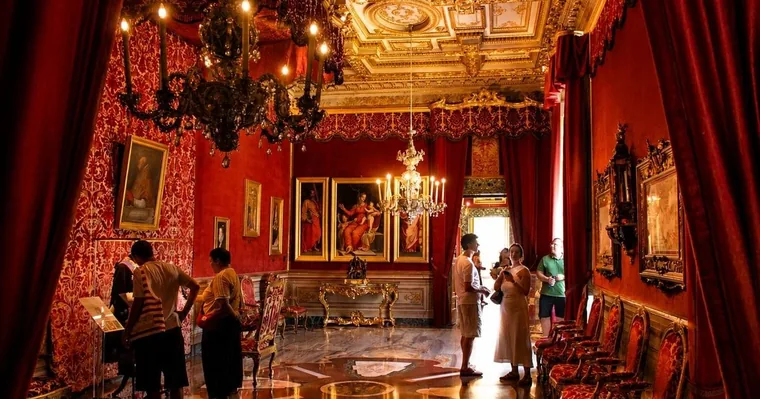
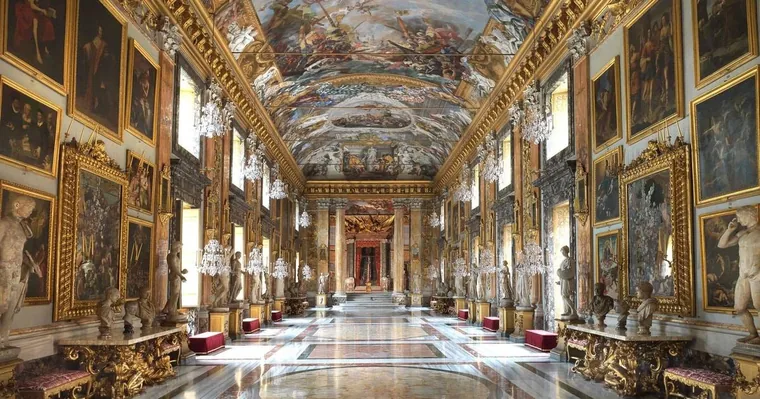
- The Colonna Gallery. The listing’s base line is “Colonna Gallery and Gardens entry ticket”, and the gallery is the room the whole visit is built around. The Great Hall.
- The gardens — named in that same base line, on the Quirinal slope, reached across the covered bridges over Via della Pilotta. One reviewer paid, had the time and went home without seeing them because she did not know they were there. What that cost her.
- The Princess Isabelle apartments, but only on one option. The second inclusion reads “Colonna Gallery, Gardens, and Apartments entry ticket (if option chosen)”. If you do not choose that option, you do not get them. What is in them.
- The route the operator publishes — eight named spaces, walked in one sequence, plus the short flight of stairs with the cannonball in it. The cannonball of 1849.
Booked separately, and what each one adds
- A guided tour. This is the listing’s single crossed-out line. It is an admission ticket and it does not pretend otherwise; reviewers who liked it best say so plainly, one of them in as many words: “No guide was needed.” The ticket, reviewed.
- The audioguide. The operator sells it separately, about five euros on top of either tier, delivered by QR code to your own phone in Italian, English, French, Spanish, German and Russian. The platform’s ticket listing does not mention it at all. The audioguide, and what is announced next.
- How it compares with the door ticket. Very close: the operator’s cheaper tier covers the Galleria, the Pio pavilion and the gardens, and the platform’s base line names the Gallery and gardens without mentioning the Pio pavilion. Both lists are printed on the tickets page so you can compare them yourself.
- Any morning that is not a Friday or a Saturday. No listing on this page can sell you a Tuesday. The palace opens twice a week and everything else is a private booking made with the foundation. Friday or Saturday.
The eight named spaces, in the operator’s own order
The visit is a sequence, not a set of highlights, and this is that sequence. Two of these stops are not among the eight: the short flight of stairs comes before the Great Hall, and the gardens come after everything.
You start in the Hall of the Colonna Bellica, climb the short flight of stairs where the cannonball is, and come out into the Great Hall, which is the room people came for. Six more named rooms follow, and then the gardens on the Quirinal slope.
- The Hall of the Colonna Bellica — First of the eight. The name is the family’s own device, and the family is named after a place rather than a word — Columna Castle at Colonna, in the Alban Hills southeast of Rome. What “Colonna” means.
- The short flight of stairs, and the cannonball — The operator’s own words: “On the short flight of stairs leading to the Great Hall it is possible to see a cannon ball that landed right there in 1849 during the period of the Roman Republic. It was fired by the French Army from the Janiculum Hill.” Rome’s own tourism authority adds the commander: the French under the orders of General Oudinot. Nobody gets past it without somebody asking to touch it. The cannonball.
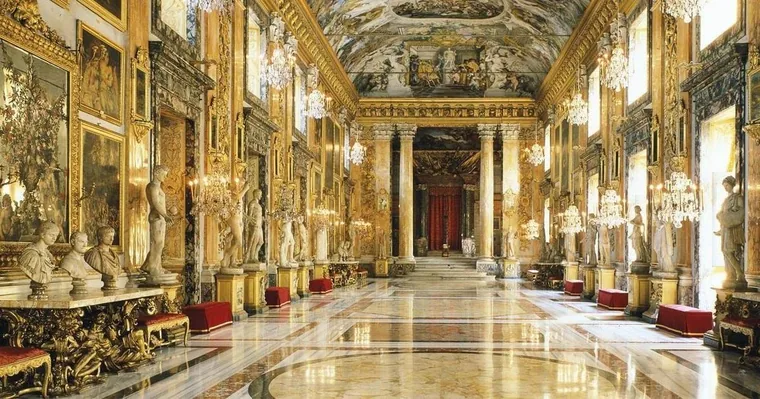
- The Great Hall — The gallery was established in 1654 by Cardinal Girolamo I Colonna and his nephew Lorenzo Onofrio Colonna, to a design by Antonio Del Grande; after Del Grande died in 1671 the work was integrated by Gian Lorenzo Bernini, Johan Paul Schor and a Fontana. It opened in 1700 and the vault was finished in 1702, with the life of Marcantonio II Colonna on it, including the Battle of Lepanto of 1571, where he commanded the papal fleet. The Great Hall, and the one scene from 1953 that was shot in it.
- The Room of the Throne — Third of the eight, and the operator gives the name and no more. What the name points at is checkable: the family held the office of Prince Assistant to the Papal Throne from 1514 until it was abolished in 2018, five hundred and four years.The family.
- The Tapestry Room — Fourth.The route, room by room.
- The Yellow Room — Fifth, and the ordering is the point: these are the operator’s names in the operator’s sequence, which is the order you walk them.
- The Chapel Room — Sixth. A private chapel in a house somebody still lives in — Don Prospero Colonna, born 1956, heads the main line, and Prince Marcantonio Colonna di Paliano, born 1948, is Prince and Duke of Paliano. Who lives there now.
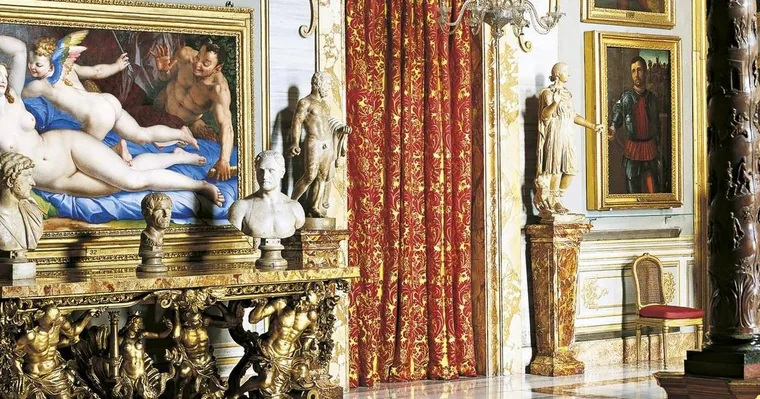
- The Primitive Room — Seventh. The collection includes Bronzino, Tintoretto, Guido Reni, Guercino, Salvator Rosa, Ghirlandaio and Gaspard Dughet, and the painting people come for is Annibale Carracci’s Il Mangiafagioli, the Beaneater.The paintings.
- The Embroidery Room — Last of the eight, and the end of the indoor route.
- The gardens — After everything, up the Quirinal slope across the covered bridges that span Via della Pilotta — which is why that street is photographed as often as it is. They are in the base ticket and people still miss them. The quarter around the palace.
That is eight named spaces plus the stairs and the gardens. The Princess Isabelle apartments, with frescoes by Pinturicchio and landscapes by Gaspard Dughet and Jan Brueghel the Elder, are a separate tier at the door and a gated option on the platform, so whether you walk them depends on what you bought rather than on which morning you came. What to see, in this order.
Four things to settle, in this order
Pick the morning first
Friday is a guided visit by reservation; Saturday is the long self-guided morning, 9:15 to 13:15. Everything else about the day follows from this one choice. Friday or Saturday.
Then check the door
Friday is Piazza SS. Apostoli 66. Saturday is Via della Pilotta 17. They are on opposite sides of the same building and the wrong one costs you the start of your morning. Getting there.
Decide which tier you want
The short ticket is the Galleria, the Pio pavilion and the gardens. The complete one adds the Princess Isabelle apartments. On the platform the apartments are an option you have to choose. Both tariffs.
The door, or the morning held
The door is about half the price and needs you at the ticket office on a Saturday morning; the operator sells nothing on its own site. Booking ahead holds your place before you travel, at a building open eight hours a week. Is it worth it.
The entry ticket, with live dates
The plain admission listing, 4.8 from 898 ratings, which is more than four times the ratings on any other listing about this building. It is an entry ticket: it crosses out the guided tour on its own page and puts the apartments behind an option. Today’s price and the Fridays and Saturdays still open are below.
Three listings about this palace, compared on what they actually say
The plain ticket, the one titled a guided tour, and the one with nothing gated. All three are priced per person. The rows below quote each listing’s own inclusion lines, because the difference between these three is not the price — two of them are the same money.
| Rome: Colonna Palace Guided Tour | The defaultRome: Colonna Palace Entry Ticket | Rome: Palazzo Colonna with Gallery, Apartments & Gardens | |
|---|---|---|---|
| Price, per person | €31 | €31 | €48 |
| Its base inclusion, as written | “Entry to Palazzo Colonna” | “Colonna Gallery and Gardens entry ticket” | Galleria, Princess Isabelle apartments, palace gardens and Pio pavilion — four flat lines |
| The apartments | Bundled with the gardens, “(if option selected)” | “(if option chosen)” | Stated flat, nothing gated |
| A live guide | “Guided tour (if option selected)” | Crossed out | Crossed out, honestly |
| Rating, and how many | 4.5 from 207 ratings | 4.8 from 898 ratings | 5.0 from 2 ratings |
| The nearest tier at the door | €15, the short Saturday ticket | €15, the short Saturday ticket | €25, the complete Saturday ticket |
| What that works out at | Reserved ahead · guide optional | Reserved ahead | Reserved ahead |
| What the extra actually buys | A booking, and an option you still have to select | Your place held before you travel | A booking, and the only listing here with no conditions on it |
| View → | Book this → | View → |
Gallery
The morning you would actually have
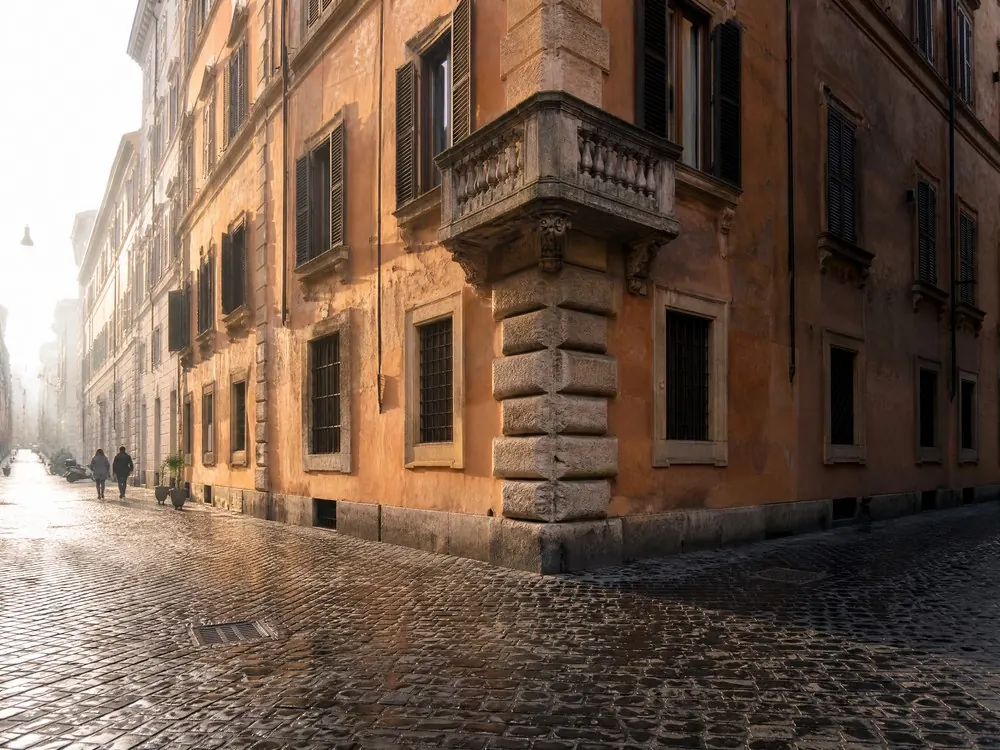
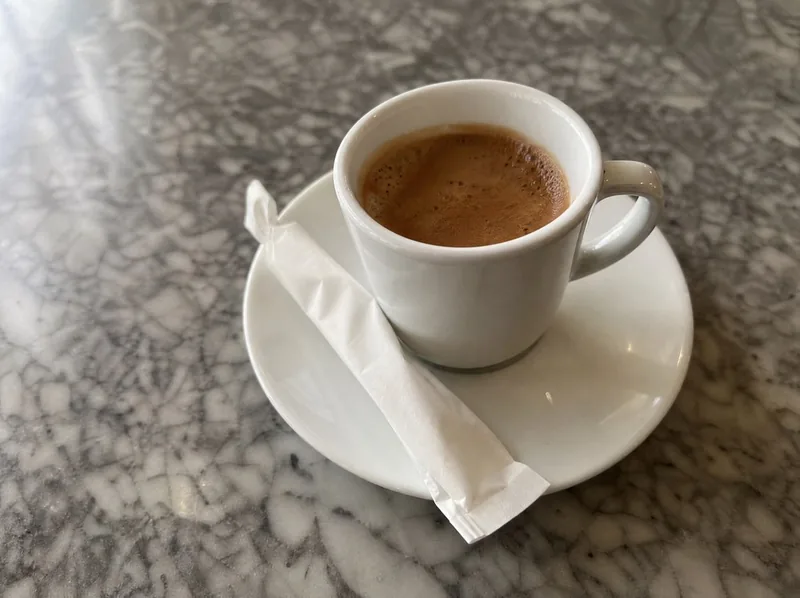
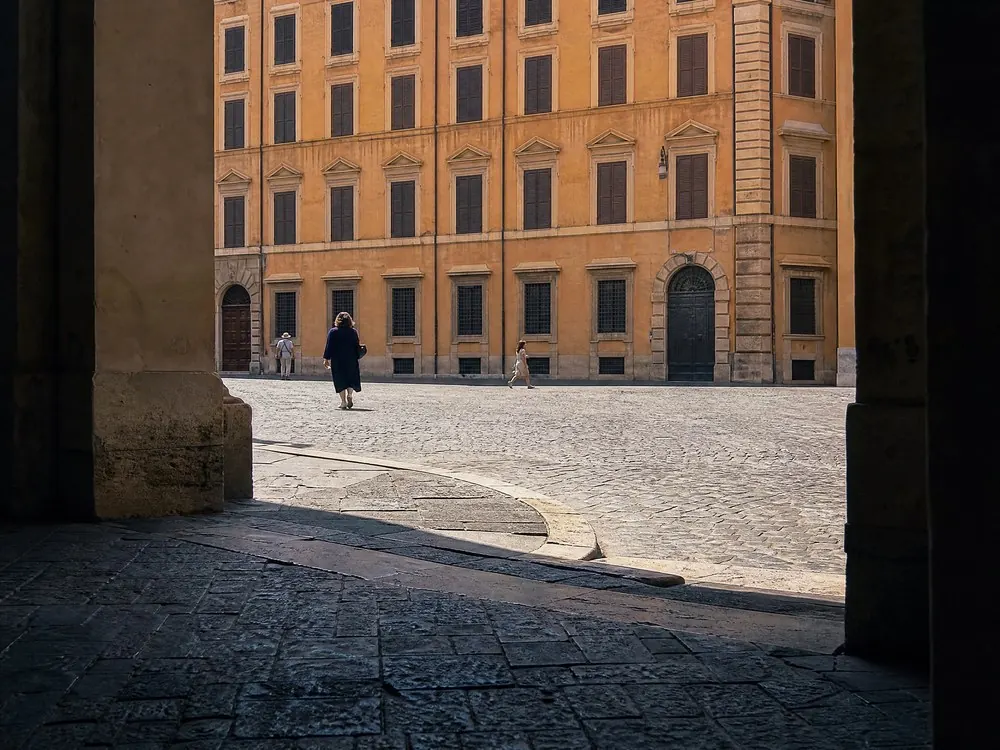
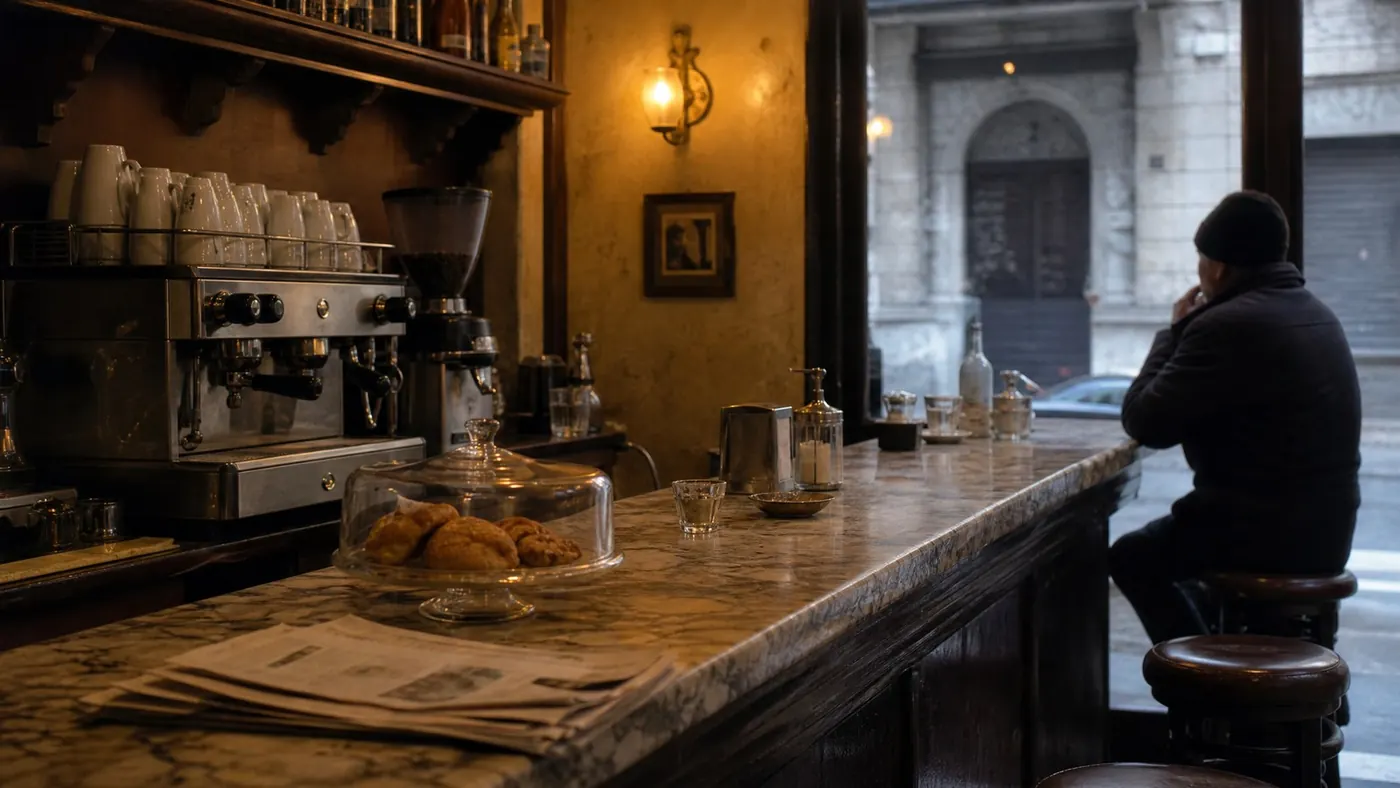
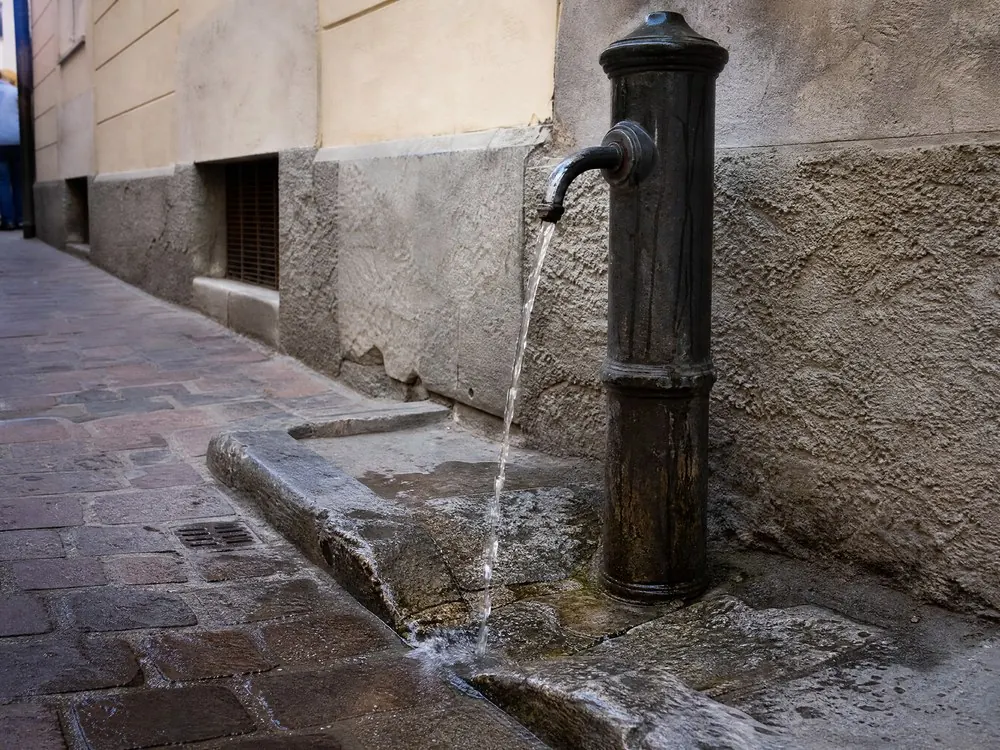
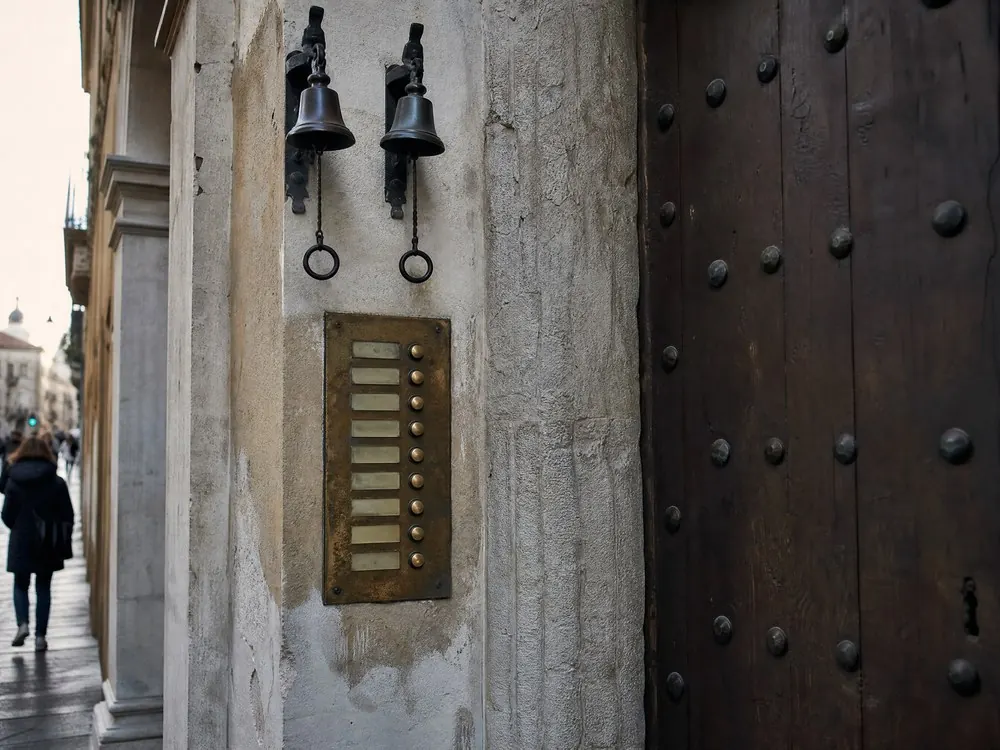
The palace opens on two mornings a week and nothing here is a queue. This is the walk over, the square it stands on, and the bar you have ten minutes in before the doors go back at 9:15.
The four palace listings, and the two you would book around them
The first four are the palace, and they are four different products: the plain entry ticket, one titled a guided tour with the guide as an option, a complete visit with everything included, and a private tour. The last two are the Colosseum and the Vatican, for the rest of a weekend that a four-hour Saturday morning leaves wide open. The full table of all 16 carries the admission column and prints every exclusion verbatim.
 The ticket itself
Rome: Colonna Palace Entry Ticket
 Guide on some options
Rome: Colonna Palace Guided Tour
 Everything, unconditionally
Rome: Palazzo Colonna with Gallery, Apartments & Gardens
 The private tour option
Colonna Palace Private Tour
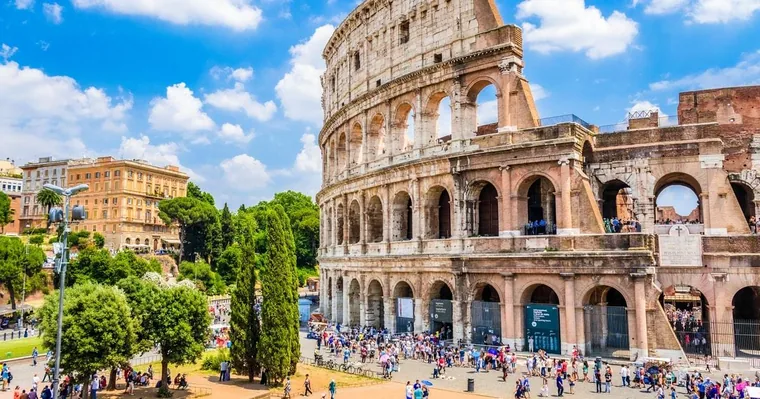 The most-booked tour in Rome
Colosseum, Roman Forum & Palatine Hill Guided Tour
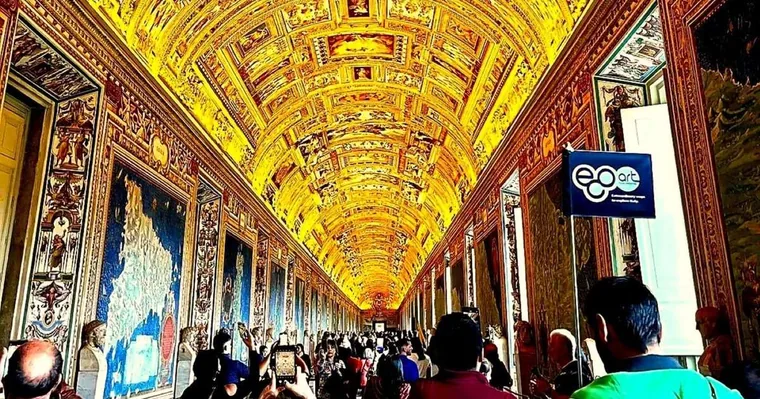 The Vatican, in one morning
Vatican Museums & Sistine Chapel Tour + St.Peter's Basilica
What people wrote afterwards
Written reviews from the listing pages, picked for the concrete detail: what somebody saw, what they missed, what the staff did. 184 of the 188 written reviews across the 16 listings are five-star, and the star averages on the cards above run from 4.0 to 5.0 across larger rating counts. The two measure different things, and both are shown. How this site reads reviews.
Brilliant palace worth the visit Only open Friday and Saturday Gardens worth seeing as very relaxing
The Palace is truly a hidden treasure. Paying the extra to see the gardens and the apartment is a must!! We had such a great time and had a lot of fun taking our picture with being able to sit in the chairs and pose by the gorgeous paintings. No guide was needed.
Excellent experience. It’s worth visiting as there are few tourists in the gallery, and there’s a picturesque collection of paintings.
It was a fabulous tour. Claudia had a wealth of knowledge about art and the Palace. We thoroughly enjoyed it.
… my friend was suffering from heat exhaustion and the staff were very attentive to her and offered her assistance from paramedics on sight, they let us take the elevator down to the princess’s apartments to catch up with our group. It was very warm as was to be expected in the middle of June but there was water fountains everywhere with cups attached
A fantastic place, and it’s worth setting aside time to visit it. Inaccurate information from GTG regarding the meeting point and ticket pick-up service. The guide, Klaudia, is a very friendly palace employee with extensive knowledge of the facility and the collections. Tour in English.
Ratings and reviews are the operators’ live GetYourGuide figures. Read our full tour reviews ›
Six things worth knowing before you go
The questions people arrive with, answered from what the operator and the listings publish.
Which morning should I take?
They are different visits. Saturday is the long one, 9:15 to 13:15, and you can go round on your own or with a guide. Friday morning is guided tours by reservation, free with the ticket, at 9:30, 10:00 and 10:30 in Italian, 9:30 and 10:00 in English and 10:30 in French. If you want to stand in front of one painting for twenty minutes, take Saturday. If you want somebody explaining the ceiling, take Friday and book it. Friday or Saturday, in full.
Which entrance do I use?
It depends on the day, and this catches people every week. Friday is Piazza SS. Apostoli 66; Saturday is Via della Pilotta 17. The accessible entrance for visitors with mobility difficulties is Piazza SS. Apostoli 66. The foundation answers the phone on +39 06 6784350. Both doors, and how to walk to them.
What does the door charge, and can I buy there?
The operator lists the short Saturday ticket at about fifteen euros and the complete one at about twenty-five; the platform’s tickets cost more and are booked in advance. The catch is where you buy: the operator sells no ticket on its own website and names Ticketone, Roma Pass, the phone, email or the Saturday ticket office. So the cheaper figure needs you in Rome on the morning, and the dearer one holds the morning from anywhere. The tariff, in a table.
Does the listing called a guided tour include a guide?
Not necessarily, and you have to read its own inclusions to find out. t699541 is titled “Colonna Palace Guided Tour” and its inclusion line reads “Guided tour (if option selected)”, with the gardens and apartments gated the same way. The guide is an option you select when booking. It carries 4.5 from 207 ratings and costs the same as the plain ticket. Read line by line.
What else should I book around the Saturday morning?
Four listings reach this palace and 10 more are the rest of Rome: the Colosseum several ways, the Vatican, the Pantheon, the Trevi aqueducts, the Domus Aurea. The palace is the one with the hard constraint — two mornings a week, four hours on the Saturday — so book that first and arrange the others round it. The Colosseum tour alone carries 89,202 ratings against the palace ticket’s 898. All of them, tabled.
Who owns it, and how rich are they?
The Colonna family owns it and shows it through the Fondazione Palazzo Colonna. Don Prospero Colonna, born 1956, heads the main line; Prince Marcantonio Colonna di Paliano, born 1948, is Prince and Duke of Paliano. On the second half of the question: no net-worth figure is published by the family, by the foundation or in any filing, so this page covers what is on record instead. What is on record, and the family.
Can’t make these dates?
Browse more available Palazzo Colonna tickets and tours and find one that fits your schedule — all with instant confirmation and free cancellation.
The Palazzo Colonna, explained
Most of the famous buildings in Rome belong to the state, the church or a museum trust. This one belongs to a family, who live in part of it and open the rest for eight hours a week. Nearly everything confusing about visiting falls out of that one fact, so start there rather than with the paintings.
Why a building this good is shut five days out of seven
The Colonna have held the site since the 1200s and the oldest section standing is 13th century. The gallery was never a museum. Cardinal Girolamo I Colonna and his nephew Lorenzo Onofrio established it in 1654 as a room in a house, and it is still a room in a house. What you buy is a couple of hours in a private home on the two mornings the family opens it.
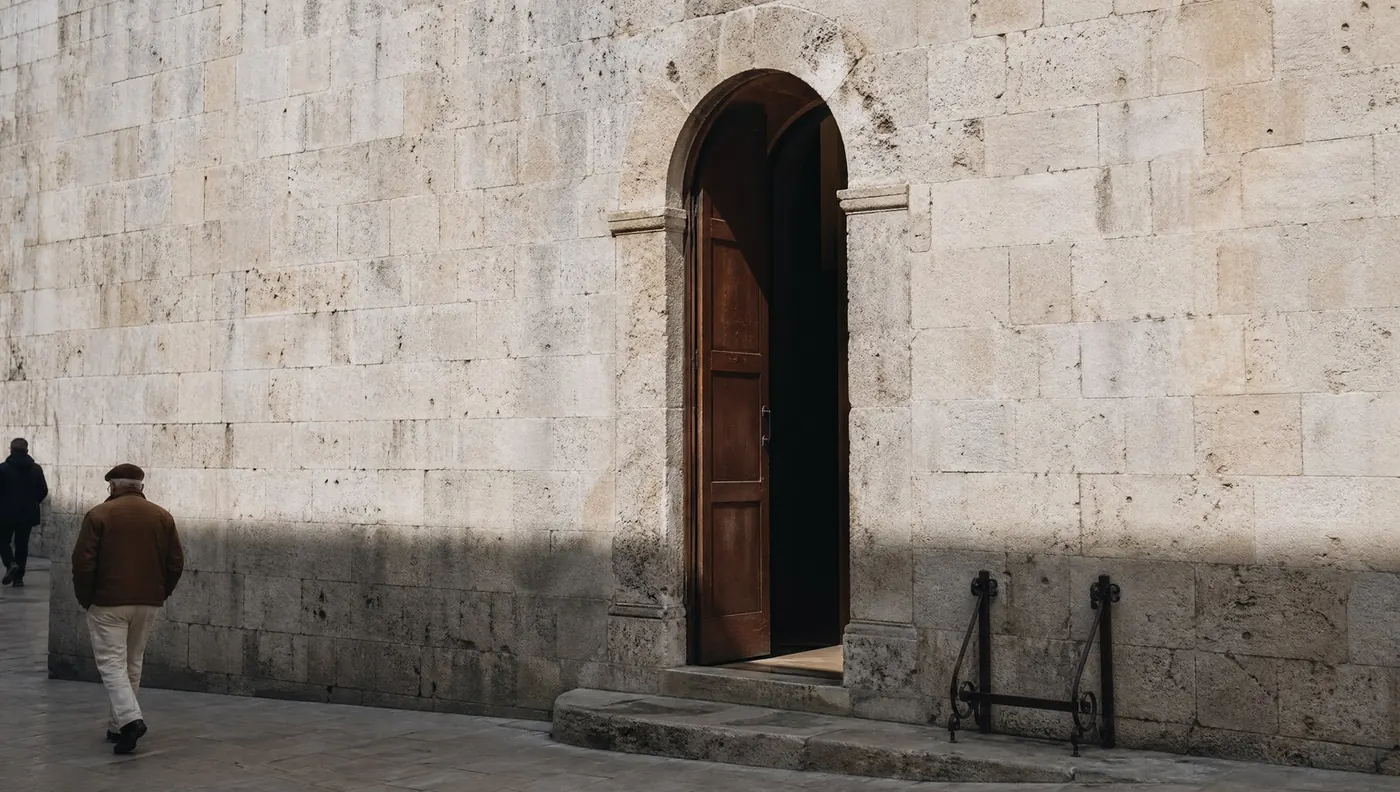
The two mornings, and the two doors
The operator sets it out in its own capitals: open to the public on Friday and Saturday mornings, even on public holidays. Saturday runs 9:15 to 13:15, self-guided or guided. Friday morning is guided tours by reservation — free, at 9:30, 10:00 and 10:30 in Italian, 9:30 and 10:00 in English, 10:30 in French. Every other day, and every afternoon, is private booking only. There is no back way in on a Wednesday.
Then the part that catches people. The entrance depends on which morning you picked. Friday is Piazza SS. Apostoli 66; Saturday is Via della Pilotta 17. Opposite faces of the same block, and the wrong one costs you the first twenty minutes of a four-hour window. The accessible entrance is Piazza SS. Apostoli 66 on either day. Friday or Saturday takes the choice apart; getting there does the doors.
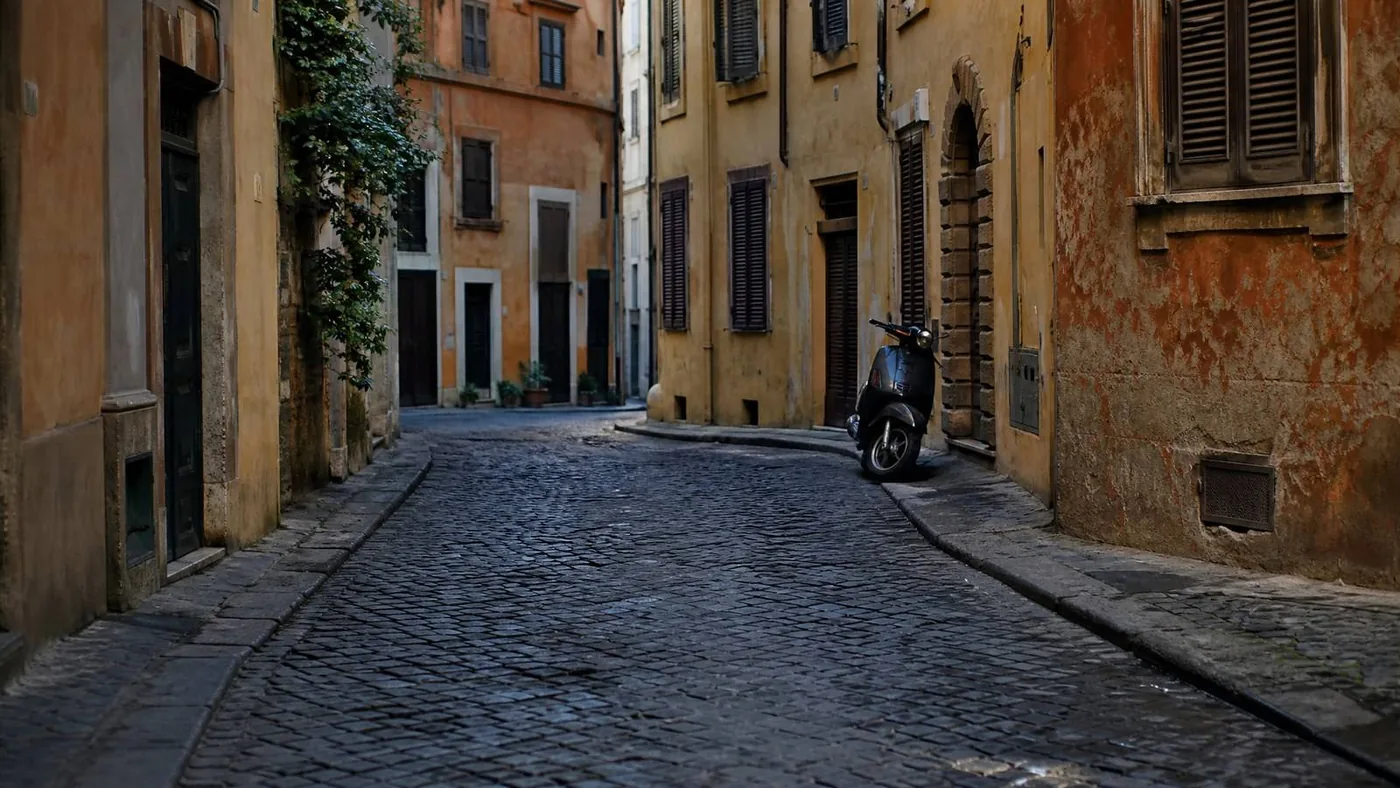
What the ticket covers, and what booking ahead adds
At the door there are two tiers. The short one, about fifteen euros, is the Galleria, the Pio pavilion and the gardens. The complete one, about twenty-five, adds the Princess Isabelle apartments, where the Pinturicchio frescoes and the Brueghel and Dughet landscapes are. An audioguide is about five on top of either, by QR code to your own phone, in six languages.
Booking ahead costs more than the door at both tiers, and in return it holds your place at a palace that opens only a few hours a week.The extra buys a booking made in advance for a building open two mornings a week, which for somebody with exactly one Saturday in Rome may be worth every cent. It is worth reading the inclusions too: on the listing called “Colonna Palace Guided Tour”, the guide is listed as “Guided tour (if option selected)”. Both tariffs, in a table, and every listing with its exclusions printed verbatim.
The room it is all for
Antonio Del Grande designed the Great Hall; after he died in 1671 the work was carried on by Gian Lorenzo Bernini, Johan Paul Schor and a Fontana — the city says Carlo and other accounts say Girolamo, so both are named here. It opened in 1700 and the vault was finished in 1702, painted with episodes from the life of Marcantonio II Colonna, including Lepanto in 1571, where he commanded the papal fleet. You will find one continuous room built to be seen whole. The ending of the 1953 film Roman Holiday was shot in it — the press conference at the close, and no other scene. On the short flight of stairs leading up to it sits a cannonball that landed there in 1849, during the Roman Republic, fired by the French Army from the Janiculum Hill. The Great Hall and the cannonball.
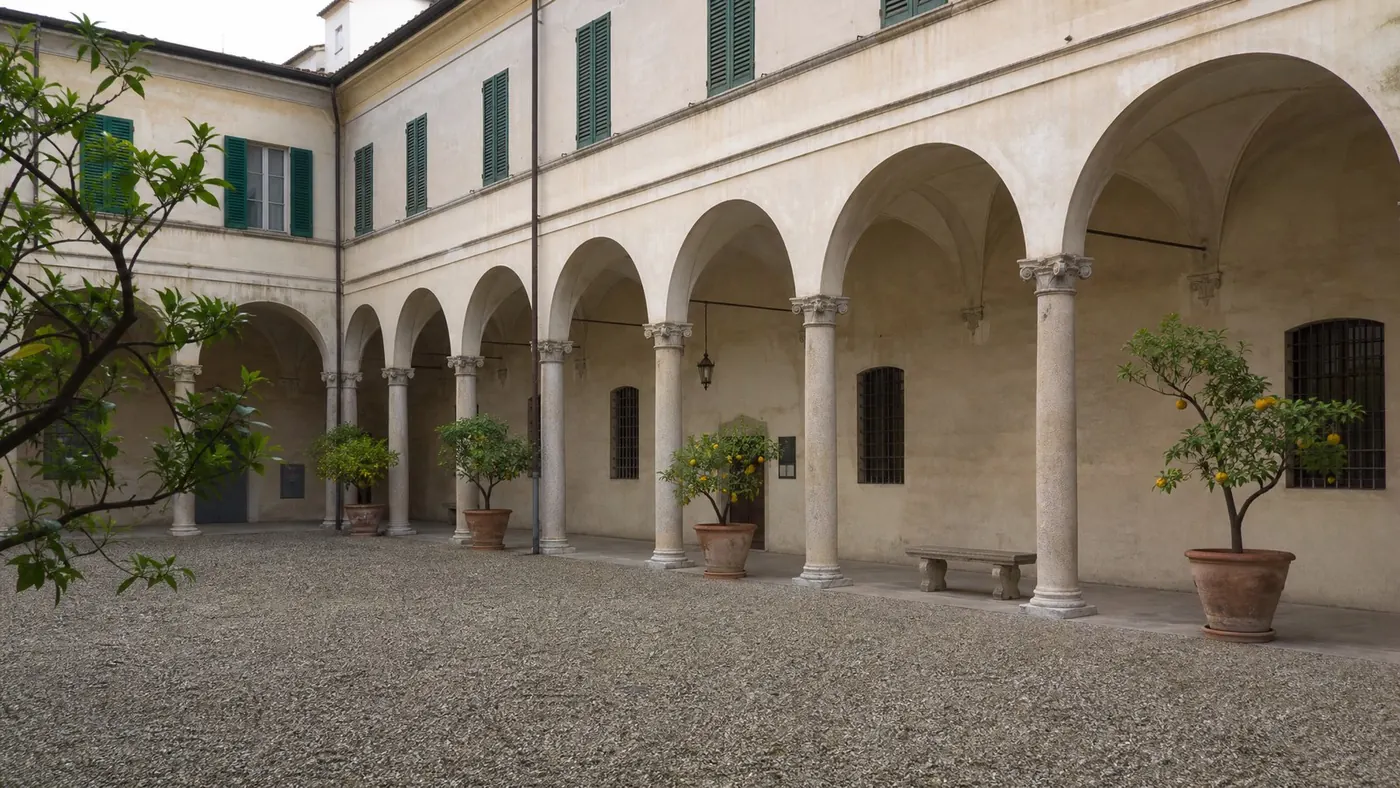
The family, and the questions people ask
Oddone Colonna was elected pope on 14 November 1417 and reigned as Martin V until 20 February 1431, ending the Western Schism. The feud with the Orsini was formally closed by the bull Pax Romana in 1511 and resurfaced anyway. The family held the office of Prince Assistant to the Papal Throne from 1514 until it was abolished in 2018 — five hundred and four years. Don Prospero Colonna, born 1956, heads the main line; Prince Marcantonio Colonna di Paliano, born 1948, is Prince and Duke of Paliano.
What is on record answers the checkable half instead.
How to spend the morning
Saturday if you want time, Friday if you want somebody talking. Buy the complete tier: the apartments are the half people skip and then regret, and one reviewer on the plain ticket went home having missed the gardens because she did not know they were in it. Come at the start of the window. If the real choice is this or the Borghese, that has a proper answer — is it worth a Roman morning.
Frequently asked questions
When is Palazzo Colonna open to the public?
Friday and Saturday mornings, and the operator states it in its own capitals: open to the public on Friday and Saturday mornings, even on public holidays. Saturday runs 9:15 to 13:15 and can be done self-guided or guided. Friday mornings are guided tours by reservation, at 9:30, 10:00 and 10:30 in Italian, 9:30 and 10:00 in English and 10:30 in French. Any other day, and any afternoon, is private booking only. The hours in full.
Which entrance do I use for Palazzo Colonna?
It changes with the day. Friday is Piazza SS. Apostoli 66. Saturday is Via della Pilotta 17. The accessible entrance, for visitors with mobility difficulties, is Piazza SS. Apostoli 66 on either day. The two are on opposite sides of the same building, so the wrong one costs you a walk around it. Getting there.
How much does a ticket to Palazzo Colonna cost?
At the door the operator sells a short Saturday ticket at about fifteen euros, covering the Galleria, the Pio pavilion and the gardens, and a complete one at about twenty-five that adds the Princess Isabelle apartments. The Friday guided tour is about thirty-five, with a reduced rate for FAI card holders, and the audioguide is about five on top of either. On the platform, tickets are booked ahead and hold your place. Every tariff, with the exact figures.
Is the ticket on this page the same as the one at the door?
Very close. The platform’s base inclusion is the Colonna Gallery and gardens; the operator’s cheaper tier is the Galleria, the Pio pavilion and the gardens. The platform does not mention the Pio pavilion in either direction. Both lists are printed side by side on the tickets page so you can compare them.
Does the Colonna Palace Guided Tour include a guided tour?
Only if you select that option. The listing is titled “Colonna Palace Guided Tour” and its own inclusions read “Guided tour (if option selected)” and “Access to gardens and apartments (if option selected)”. Both are options you select, and it costs the same as the plain entry ticket. It carries 4.5 from 207 ratings. That listing, reviewed.
What is the cannonball in the staircase?
The operator’s own description is the best one: “On the short flight of stairs leading to the Great Hall it is possible to see a cannon ball that landed right there in 1849 during the period of the Roman Republic. It was fired by the French Army from the Janiculum Hill.” Rome’s tourism authority adds that the French were under the orders of General Oudinot. It is still where it landed, on the way up to the Great Hall. The cannonball of 1849.
How big is the Great Hall?
Its dimensions are not published by the operator, the city’s tourism authority or the encyclopedia. What is documented is when it was made: established in 1654 by Cardinal Girolamo I Colonna and Lorenzo Onofrio Colonna to Antonio Del Grande’s design, integrated after his death in 1671 by Bernini, Schor and a Fontana, opened in 1700, with the vault finished in 1702. A completion date a year later also circulates, and the sources disagree on whether the Fontana was Carlo or Girolamo, and both are given here. The Great Hall.
Was Roman Holiday filmed at Palazzo Colonna?
The ending was. The press conference that closes the 1953 film was shot in the gallery, and no other scene was shot there. It is the single most recognisable thing about the room and it is also about ninety seconds of a two-hour film. The ending, and where the rest was shot.
Still have questions? Email us [email protected]